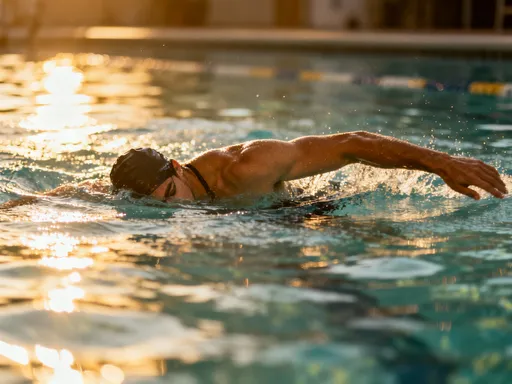
Dive Into Fitness: Why Swimming Changed My Routine Overnight
Ever felt like your workout’s missing that something? I was stuck too—until I swapped the treadmill for water. Swimming didn’t just ease my joints; it reshaped my stamina, mood, and energy in days. No exaggeration: within a week, I felt lighter, stronger, and oddly calmer. If you're craving a fast, full-body boost without burnout, this is it. Let me walk you through how a simple splash led to real change.
The Hidden Burnout of Land-Based Workouts
Many women in their 30s, 40s, and 50s turn to familiar exercises—jogging, spinning classes, or weight circuits—believing that pushing harder means better results. But too often, the outcome isn’t strength or vitality. It’s sore knees, stiff shoulders, restless sleep, and a growing sense of frustration. The truth is, high-impact workouts place constant stress on joints, tendons, and muscles, especially as natural collagen production declines with age. Over time, this cumulative strain can lead to overuse injuries like plantar fasciitis, tendonitis, or lower back pain, all of which derail fitness goals rather than support them.
Exercise should enhance quality of life, not compromise it. Yet countless women report feeling more drained after a vigorous gym session than before. This paradox stems from the body’s response to repetitive stress. When muscles are worked intensely without adequate recovery, inflammation builds up. Cortisol, the primary stress hormone, remains elevated, which can disrupt sleep, increase fatigue, and even contribute to weight retention—particularly around the midsection. The cycle becomes self-defeating: exercise meant to improve health ends up reinforcing exhaustion.
Swimming offers a powerful alternative by removing gravitational pressure while maintaining cardiovascular and muscular demand. Because the body is supported by water, impact on joints drops dramatically. Research from the American Council on Exercise shows that water supports up to 90% of body weight, depending on depth, which reduces strain on hips, knees, and ankles. This makes swimming uniquely accessible for those managing arthritis, previous injuries, or general joint sensitivity. It’s not about abandoning land workouts altogether—but about choosing movement that sustains rather than depletes.
Moreover, swimming avoids the mental fatigue often tied to repetitive routines. The monotony of staring at a treadmill display or counting reps can dull motivation over time. In contrast, swimming introduces rhythm, breath control, and sensory variety. The sound of water, the glide of movement, and the focus on coordination engage the mind differently. This subtle shift can reignite enthusiasm for fitness, especially for women juggling family, work, and personal well-being. It’s not just physical relief—it’s psychological renewal.
Why Water Is the Ultimate Fitness Equalizer
Water is not just a medium for movement—it’s an intelligent resistance tool. Unlike air, water provides natural, multidirectional resistance approximately 12 times greater, meaning every arm pull, leg kick, and core engagement works against a constant force. This resistance builds muscular endurance without the need for weights or machines. The result? A full-body workout that strengthens major muscle groups—back, chest, shoulders, glutes, and core—simultaneously. For women seeking efficient routines, this integration of strength and cardio in one activity is transformative.
Buoyancy plays a crucial role in making swimming both effective and forgiving. When submerged up to the chest, the body bears only about 50% of its weight. At shoulder level, that drops to 10%. This allows for freer movement, particularly beneficial for those carrying extra weight or managing mobility limitations. Yet, despite this support, the cardiovascular system remains engaged. Studies published in the Journal of Sports Science & Medicine show that heart rate during moderate swimming is comparable to running at a steady pace, but with lower perceived exertion. This means you can achieve similar aerobic benefits without feeling breathless or overwhelmed.
The hydrostatic pressure of water also improves circulation. As water presses gently against the skin and limbs, it assists venous return—the process by which blood flows back to the heart. This can reduce swelling in the legs and feet, a common concern for women who stand for long periods or experience fluid retention. Additionally, cooler pool temperatures help regulate body heat, preventing overheating and allowing for longer, more comfortable sessions. This thermal regulation is especially valuable for perimenopausal women, who may struggle with temperature fluctuations during exercise.
Unlike land-based workouts that often favor certain body types or fitness levels, swimming levels the playing field. It doesn’t matter if you’re five feet tall or six feet, athletic or just starting out—water accommodates everyone. Technique matters more than speed, and progress is measured by endurance, breath control, and comfort, not by how many burpees you can do. This inclusivity fosters a sense of achievement that isn’t tied to appearance or performance metrics, making swimming a deeply sustainable form of fitness.
Fast Results: What Changes in Just One Week
One of the most compelling reasons to try swimming is how quickly benefits emerge. Within days, many new swimmers notice subtle but meaningful shifts. Sleep often improves almost immediately. The rhythmic breathing required in swimming—inhaling through the mouth, exhaling steadily underwater—trains the diaphragm and calms the nervous system. This pattern mimics controlled breathing exercises used in stress reduction programs. Over time, it helps regulate the autonomic nervous system, shifting the body from 'fight-or-flight' mode to 'rest-and-digest' mode, which supports deeper, more restorative sleep.
Lung capacity also begins to expand with consistent practice. Unlike shallow chest breathing common in daily life, swimming demands full, deep breaths to sustain effort. Over a week, this strengthens the intercostal muscles and diaphragm, improving oxygen uptake. Even short sessions—20 minutes, three times a week—can increase tidal volume, the amount of air moved in and out with each breath. Enhanced breathing efficiency translates to everyday benefits: less breathlessness climbing stairs, more stamina during household tasks, and a greater sense of physical confidence.
Inflammation markers tend to decrease with aquatic exercise. A study from the University of Buffalo found that regular swimmers showed lower levels of C-reactive protein, a key indicator of systemic inflammation, compared to those doing high-impact training. Reduced inflammation means less joint stiffness, quicker recovery, and fewer aches. For women managing autoimmune conditions or chronic pain, this can be life-changing. While swimming isn’t a cure, it creates a supportive environment for the body to heal and rebalance.
Mood improvements are frequently reported, too. The combination of rhythmic motion, breath focus, and sensory isolation in water produces a mild meditative state. This 'floating mindfulness' can ease anxiety and quiet mental chatter. Many women describe a sense of weightlessness—not just physically, but emotionally. After just a few sessions, the water becomes a sanctuary, a place to reset amidst daily demands. These changes aren’t dramatic miracles; they’re quiet, cumulative shifts that build resilience from within.
Getting Started: Your First 3 Pool Sessions Made Simple
Starting something new can feel intimidating, especially if you haven’t swum since childhood or feel self-conscious in a swimsuit. The key is to begin with simplicity and kindness toward yourself. For your first session, focus not on distance or speed, but on presence. Arrive early to find a quiet lane or corner of the pool. Wear a comfortable swimsuit and consider a swim cap to keep hair out of your face. Goggles are essential—they allow you to see underwater and protect your eyes from chlorine. Bring a towel, water bottle, and a small kickboard if the pool provides one.
Begin with five minutes of gentle movement: walking in chest-deep water, lifting knees, rotating arms. This warms up joints and acclimates your body to the environment. Then, try floating on your back for 30 seconds, arms out, ears submerged. This teaches buoyancy and builds confidence. Next, practice freestyle (front crawl) with a kickboard. Hold the board with both hands, kick from the hips (not the knees), and turn your head to the side to breathe every few strokes. Start with just four lengths, resting 30 seconds between each. Focus on smooth, continuous motion rather than speed.
For the second session, repeat the warm-up and add backstroke. This stroke is ideal for beginners because your face stays out of the water, reducing anxiety about breathing. Lie on your back, arms alternating in a windmill motion, legs kicking gently. Try six lengths, again using a kickboard if needed. Pay attention to your neck—keep it relaxed, looking up, not straining to see forward. Between laps, stand and take deep breaths. This is not a race; it’s re-education of movement.
By the third session, you might feel ready to swim without aids. Try freestyle for five minutes continuously, using the wall to push off and breathe as needed. If you lose rhythm, switch to breaststroke, which allows for natural breathing every stroke. Finish with five minutes of gentle kicking on your back, arms at your sides. After each swim, walk in the shallow end to cool down. These first sessions aren’t about perfection—they’re about building familiarity, comfort, and a foundation for progress.
Building a Sustainable Routine in 10 Minutes a Day
One of the greatest barriers to fitness is time. Between meals, school runs, work deadlines, and household duties, finding an hour for exercise feels impossible. The beauty of swimming lies in its adaptability. Research from the British Journal of Sports Medicine confirms that even 10 minutes of daily aerobic activity, when done consistently, yields measurable health benefits. The key isn’t duration—it’s regularity. A short swim every day builds momentum far more effectively than an hour-long session once a week.
Start by anchoring your swim to an existing habit. If you drop kids at school at 8:15 a.m., stay and swim until 8:25. If you finish work at 5:30, go straight to the pool. Treat it like a non-negotiable appointment. Even if you only manage three days a week at first, that’s progress. Use a simple notebook or app to track each session—write down how many lengths, how you felt, or how many breaths you took per lap. This creates a sense of accomplishment and helps you notice gradual improvements.
During your 10-minute swim, aim for continuous movement with brief rests. For example: swim four lengths freestyle, rest 20 seconds, then four lengths backstroke. Or use a kickboard for five minutes, then swim slowly for five. The goal is to keep your heart rate slightly elevated while maintaining control. Over time, you can increase to 15 or 20 minutes, but the initial focus should be on consistency, not intensity. This micro-approach prevents burnout and makes fitness feel manageable, not overwhelming.
As habits form, you may find yourself looking forward to these quiet moments. The pool becomes a space apart from responsibilities—a place to move, breathe, and reconnect with your body. Unlike crowded gyms or loud classes, swimming offers solitude and rhythm. This mental clarity often spills into the rest of the day, improving focus and patience. And because the physical demands are low-impact, you’re less likely to feel sore or exhausted afterward, making it easier to stick with long-term.
Beyond Calories: The Mental and Emotional Perks of Swimming
While swimming burns calories—approximately 400 to 500 per hour for moderate effort—its true value extends far beyond weight management. The repetitive nature of strokes, the sound of water in the ears, and the focus on breath create a unique mental state. Neuroscientists refer to this as a 'flow state,' where attention narrows, distractions fade, and the mind enters a calm, focused rhythm. This is similar to the effects of meditation, yoga, or mindful walking, but amplified by the sensory experience of being in water.
The parasympathetic nervous system, responsible for relaxation and recovery, becomes activated during rhythmic swimming. Controlled exhalation underwater stimulates the vagus nerve, which helps regulate heart rate and reduce stress hormones. Over time, this can lead to lower baseline anxiety and improved emotional regulation. Many women report feeling 'reset' after a swim, as if mental clutter has been washed away. For those managing anxiety, depression, or the emotional ups and downs of hormonal changes, this effect is invaluable.
The concept of 'blue mind,' coined by marine biologist Wallace J. Nichols, describes the mildly meditative state people enter when near, in, or under water. It’s characterized by calm, happiness, and a sense of awe. While the term originally referred to natural bodies of water, the principle applies to pools as well. The visual simplicity—blue tiles, rippling light—and the physical sensation of buoyancy trigger a soothing response in the brain. This isn’t just poetic—it’s neurological. fMRI studies show that water-related environments reduce activity in the amygdala, the brain’s fear center, promoting feelings of safety and peace.
Emotionally, swimming fosters self-trust. Each lap completed, each breath mastered, each day shown up—these small victories rebuild confidence. For women who’ve spent years prioritizing others, swimming offers a rare form of self-care that isn’t passive. It’s active, embodied, and empowering. You’re not just surviving the day—you’re strengthening yourself from within. This internal shift often leads to greater patience, resilience, and joy in everyday life.
Staying Safe and Smart: Know Your Limits
Swimming is one of the safest forms of exercise, but like any physical activity, it requires awareness. The most common injury among recreational swimmers is shoulder strain, often caused by poor technique or overuse. To prevent this, focus on form from the beginning. In freestyle, rotate your body with each stroke rather than reaching too far forward with your arm. Keep your elbow high during the pull phase to reduce rotator cuff stress. If you feel any pain, stop and rest. It’s better to swim fewer laps with proper technique than to push through discomfort.
Hydration is often overlooked in swimming. Because you don’t see sweat in the water, it’s easy to forget that your body is still losing fluids. Always drink water before and after your swim. Dehydration can lead to dizziness, fatigue, and muscle cramps, especially in warmer indoor pools. Additionally, eat a small, balanced snack—like yogurt with fruit or a banana with peanut butter—within 30 minutes of finishing. This supports muscle recovery and stabilizes blood sugar.
If you have a chronic condition such as high blood pressure, diabetes, or heart disease, consult your healthcare provider before starting a swimming routine. While aquatic exercise is often recommended for these conditions, individual needs vary. Your doctor can advise on appropriate intensity and duration. Pregnant women can also benefit from swimming, as it relieves pressure on the spine and improves circulation, but should avoid extreme exertion and very hot water.
Finally, listen to your body. Some days, you’ll feel strong and glide effortlessly. Other days, fatigue or stress may make swimming feel harder. That’s normal. Adjust your effort accordingly. Fitness is not linear, and progress isn’t measured only in laps or speed. Sometimes, just showing up is the victory. Honor your body’s signals, and you’ll build a practice that lasts for years.
Conclusion: A Lifelong Movement, Not a Trend
Swimming is more than a workout—it’s a lifelong companion. Unlike fitness fads that come and go, swimming adapts to every stage of life. Whether you’re 30, 50, or 70, it remains accessible, effective, and restorative. It doesn’t require expensive gear or trendy classes. All it asks is your willingness to begin. The water doesn’t judge your speed, shape, or past fitness failures. It offers support, resistance, and peace in equal measure.
The changes it brings are not loud or flashy, but deep and lasting. Better sleep. Easier breathing. Calmer nerves. Stronger muscles. These are the foundations of true well-being. And because swimming feels good from the first splash, it’s easier to stick with. It becomes less of a chore and more of a ritual—a daily promise to yourself.
If you’ve been waiting for the right time to start, let this be it. Find a local pool, gather your gear, and take that first step. You don’t need to swim like an Olympian. You just need to move, breathe, and trust the process. The water isn’t calling to change you overnight. It’s waiting to carry you forward, one gentle stroke at a time.